Fractional Ownership vs. Timeshares: What’s the Difference, and Which One Is Right for You?

Ask us about this fractional ownership opportunity in Tulum starting at 380,000 MXN (approx. 18,360 USD).
If you’ve ever dreamed of owning a vacation home—but without the full-time responsibility or price tag—you’ve probably come across the terms fractional ownership and timeshare. While they might sound similar, they’re very different when it comes to ownership rights, resale value, usage flexibility, and even inheritance.
In this post, we’ll break down the key differences between these two models so you can decide which one is a better fit for your lifestyle and investment goals.
The Key Difference: Ownership vs. Access
At a glance, both options allow you to enjoy a vacation property without buying it outright—but only fractional ownership gives you a real share of the property. A timeshare, on the other hand, only gives you the right to use the property for a certain period of time.
Let’s dig deeper.
Fractional Ownership vs. Timeshare: Side-by-Side Comparison
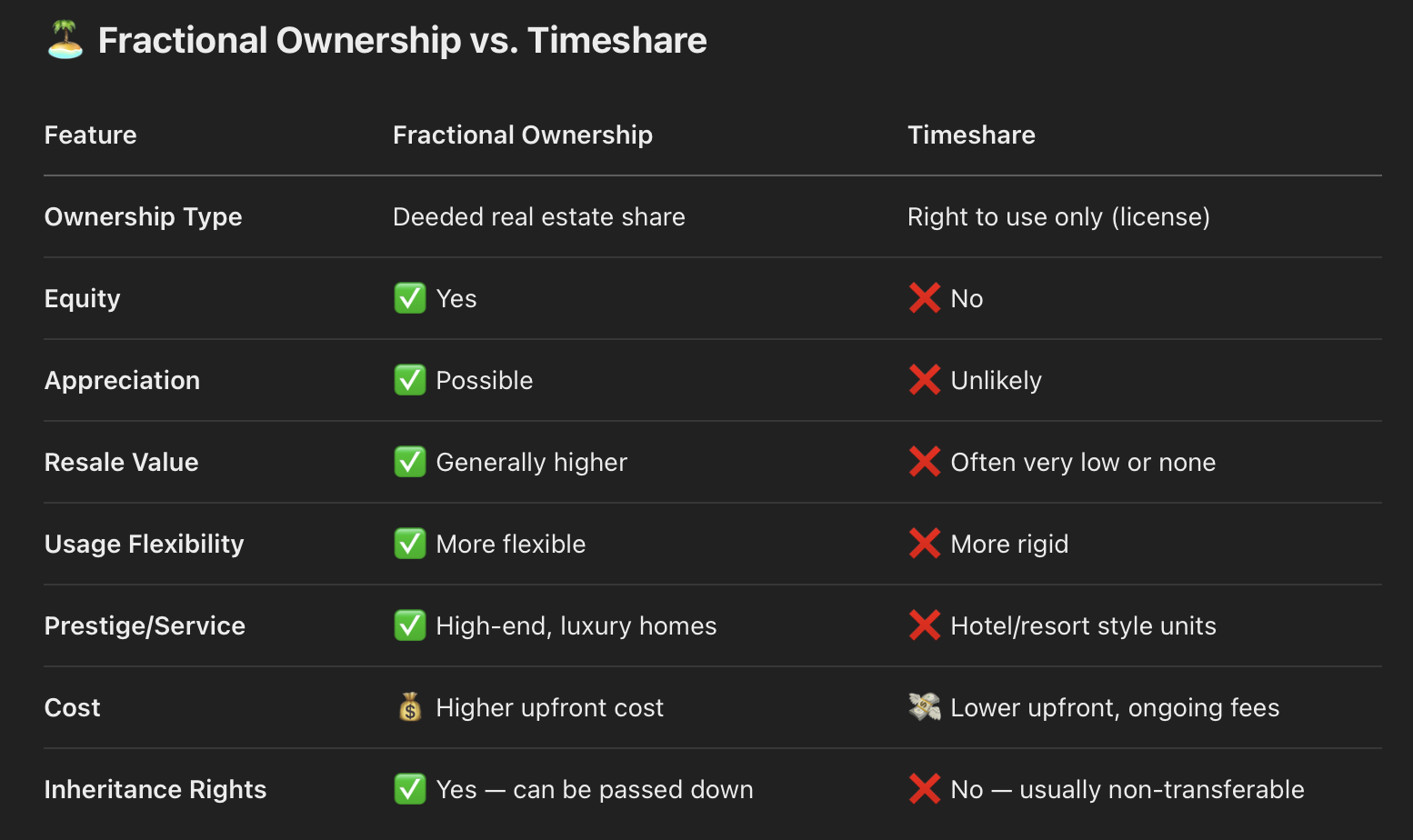
What Is Fractional Ownership?
Fractional ownership means you co-own a property with a small group of people—often 4 to 12. Each owner holds a deeded interest in the property and gets exclusive access to it for a number of weeks each year.
You’re not just buying time—you’re buying a piece of the actual property.
Benefits:
True real estate investment
Potential for property appreciation
Ability to sell or pass down your share
Professional property management
Ideal for people who want a second home experience with less hassle
What Is a Timeshare?
A timeshare gives you the right to use a property for a specific week (or set of weeks) each year, but you don’t own any part of the property itself. You're essentially prepaying for future vacations in the same location (or a network of properties if it’s part of a vacation club).
Drawbacks:
Very limited resale value
Hard to get out of contracts
Fixed schedules with less flexibility
Ongoing maintenance fees that often rise over time
No equity or inheritance rights
What About Inheritance?
This is where the difference really matters.
Fractional ownership is real property, which means your share can be included in your estate and passed on to your children or other heirs.
Timeshares usually cannot be inherited. Even when they technically can be, many families choose to walk away from them due to the long-term fees and low resale value.
Which One Should You Choose?
Ask yourself:
Do you want to invest in a vacation property that can appreciate over time?
Are you looking for more flexibility and control over your usage?
Do you want to leave something of value to your family?
If you answered yes, fractional ownership is likely the better choice. It’s ideal for buyers who want a true real estate experience—without the full-time burden of owning a second home.
If you’re simply looking for a predictable vacation in the same place every year and don’t mind paying for the convenience, a timeshare could be a lower-cost option—but understand the limitations.
Now You Know the Difference Between Fractional Ownership and Timeshares
Fractional ownership and timeshares both offer access to vacation properties, but they serve different goals. One is a real estate investment with long-term value. The other is a prepaid vacation package with limited flexibility and zero equity.
At the end of the day, the right option depends on your lifestyle, budget, and long-term vision.
Thinking of investing in a fractional ownership property in Mexico?
We can help you find the perfect fit—reach out for a personalized consultation and explore our curated listings.