Mexico vs Florida: Where Should You Buy Property in 2026?
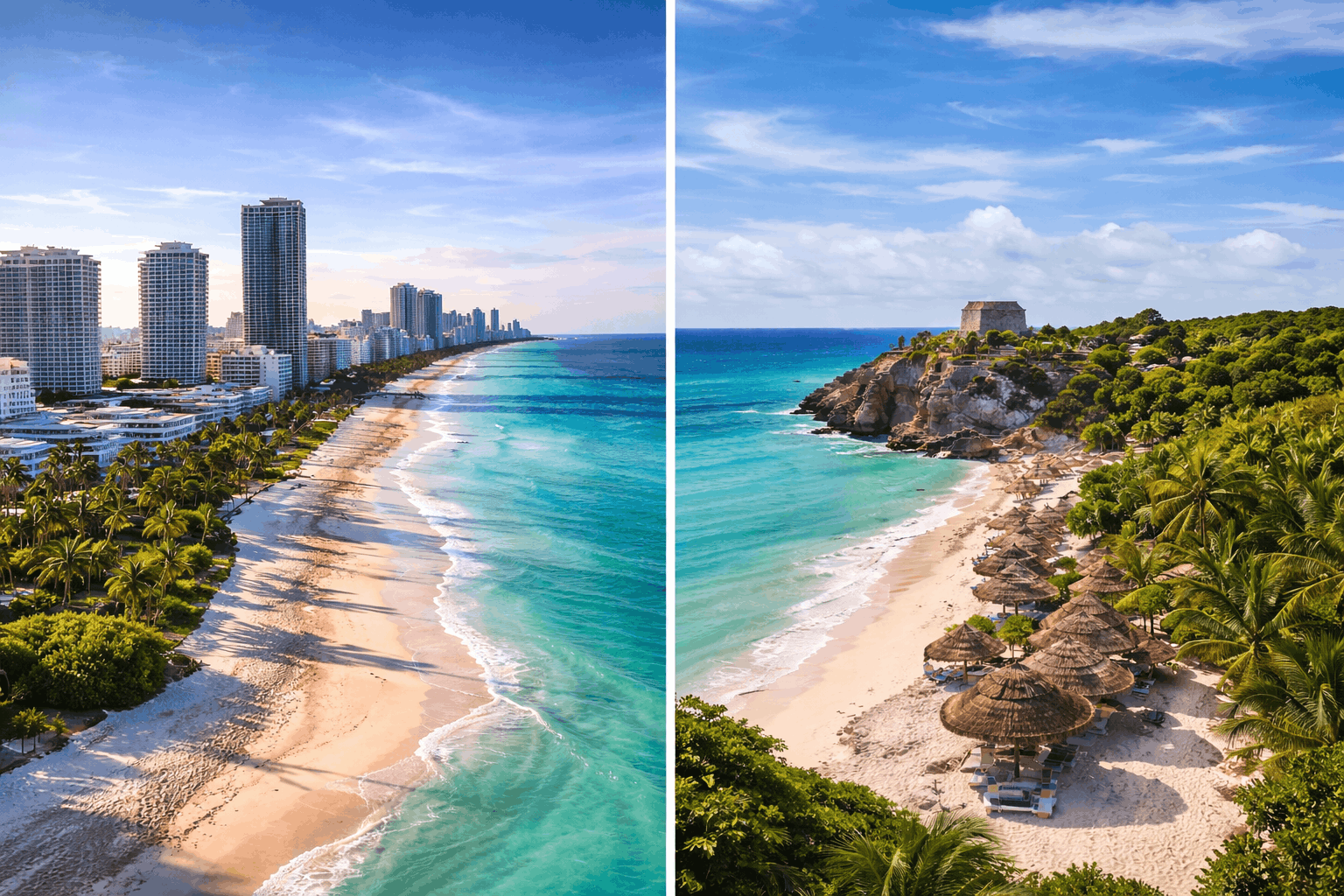
For decades, Florida was the obvious choice.
If you were Canadian and wanted sunshine, you bought in Naples.
If you were American looking for no state income tax, you considered Miami or Tampa.
If you wanted predictable, close-to-home comfort with palm trees, Florida made sense.
But over the last few years, something has quietly shifted.
More of our clients at Paradise Listings are coming to us after already owning in Florida. Others are comparing both markets side by side before making their first international purchase. And increasingly, the Riviera Maya is not the “exotic alternative.” It’s the serious contender.
Why?
Because ownership costs in Florida have changed dramatically. Insurance premiums have surged. HOA fees in older condo buildings have climbed sharply following new structural regulations. Property taxes continue to rise with reassessments. For many buyers, the numbers simply don’t feel as attractive as they once did.
At the same time, Mexico, particularly the Riviera Maya, has matured as a real estate market.
This is no longer a speculative frontier. The Riviera Maya now offers:
Gated master-planned communities
Branded residences
Preconstruction investment opportunities
Modern infrastructure
International airport connectivity
Strong short-term rental demand
And perhaps most importantly, security.
Today, buying property in Mexico is not about taking a risk. It’s about understanding the structure. When guided properly with strong due diligence, a reputable Notario Público, and a clear legal strategy, the process is structured, secure, and predictable.
That’s where we come in.
At Paradise Listings, we don’t push markets. We advise based on alignment. We work with Canadians and Americans who want to understand the real numbers, the legal framework, the appreciation potential, and the lifestyle implications before they move forward.
Many of them begin with the same question:
“Should I just buy in Florida… or does Mexico make more sense in 2026?”
This article will walk you through both sides — clearly, objectively, and strategically — so you can decide what truly aligns with your financial goals and the life you want to build.
Because this isn’t just about palm trees.
It’s about where your capital works harder and where you feel most at home.
Market Trend: Why Canadian Snowbirds Are Choosing Mexico
Beyond lifestyle and cost comparisons, there is a broader macro trend unfolding and it’s directly influencing real estate decisions.
For decades, Florida was the default winter escape for Canadian snowbirds. It was familiar, accessible, and well-served by direct seasonal flights. But in recent years, travel patterns have begun to shift.
Several major Canadian airlines, including Air Transat and WestJet, have announced significant reductions or cancellations of flights to U.S. destinations such as Florida, citing persistently low demand. Air Transat has publicly indicated plans to end all flights to the U.S. by June 2026. At the same time, U.S. tourism boards, including Florida’s, have acknowledged noticeable declines in Canadian visitors and are actively working to regain that market share.
This is not just a tourism story.
It’s a signal.
When air routes adjust, it reflects real consumer behavior. Canadians are voting with their wallets and their travel habits. Fewer seasonal flights to Florida and stronger capacity into Mexico suggest a rebalancing of winter preferences.
The Riviera Maya, particularly Cancun, Playa del Carmen, and Puerto Morelos, continues to benefit from:
Strong direct airlift from major Canadian cities
Competitive airfare pricing
Consistent winter demand
High tourism resilience
A growing expat and part-time resident community
For many Canadians, Florida no longer feels like the automatic choice. Rising insurance premiums, HOA increases, currency considerations, and broader geopolitical sentiment are contributing to hesitation. At the same time, Mexico offers warm weather, lower carrying costs, and a lifestyle that feels both relaxed and dynamic.
We’re seeing this shift firsthand.
At Paradise Listings, a growing number of our Canadian clients begin conversations by saying, “We used to go to Florida every winter, but we’re exploring Mexico now.”
As travel access realigns and cost comparisons become clearer, the Riviera Maya is emerging not just as an alternative — but as a primary winter strategy for Canadians looking to optimize both lifestyle and long-term investment potential.
Snowbird season is evolving.
And so is where Canadians are choosing to anchor their second homes.
Cost of Home Ownership: Mexico vs Florida
When buyers first reach out to us at Paradise Listings, the conversation often starts with lifestyle.
But it quickly becomes about numbers.
And in 2026, cost of ownership is where the Florida vs. Mexico comparison becomes very real.
Let’s break it down clearly.
Property Prices: What Does Your Budget Actually Buy?
In many parts of South Florida, especially coastal markets like Miami, Naples, or Fort Lauderdale, average condo prices near the beach often exceed $500–$800 USD per square foot, with luxury properties pushing well beyond that.
In contrast, in the Riviera Maya:
A modern 2-bedroom condo near the beach in Playa del Carmen can still be found in the $250,000–$400,000 USD range. For example, one of our clients from Arizona just bought a 2-bedroom condo with direct ocean views for under $300K USD. Learn more.
In Puerto Morelos, buyers can access gated community homes and presale opportunities at entry points that would be difficult to find in comparable Florida beach markets.
In Cancun’s Hotel Zone, beachfront inventory is limited but still often priced below comparable Miami oceanfront properties when you compare quality and size.
What makes Mexico particularly compelling is the presale advantage.
In Florida, most inventory is resale. In the Riviera Maya, you can enter projects 12–36 months before delivery, locking in early pricing and structured payment plans. This gives investors and second-home buyers leverage that is far harder to access in mature U.S. coastal markets.
At Paradise Listings, we help you evaluate whether resale stability or presale upside better matches your risk tolerance and timeline.
Property Taxes: A Major Difference
Property taxes in Florida typically range between 0.8% and 2% of assessed value annually, depending on the county and homestead status.
In Mexico, annual property tax — known as predial — is significantly lower.
For a majority of Riviera Maya properties, predial is well under 1%, amounting to a few hundred dollars per year, even on higher-end homes. The difference surprises many of our American and Canadian clients.
Lower annual tax burden directly impacts long-term holding costs and overall ROI.
Insurance Costs: The Florida Factor
This is where we’ve seen the biggest shift.
In recent years, Florida homeowners have experienced sharp increases in insurance premiums due to hurricane exposure and carrier withdrawals from the state. Condo associations have also been required to comply with stricter structural reserve requirements, driving HOA increases.
In Mexico, property insurance is available and affordable relative to Florida, even in coastal areas. Coverage structures differ, and it’s important to work with experienced brokers, but overall, the cost burden has historically been lower.
We always recommend buyers factor in:
Property insurance
HOA master policy coverage
Storm preparedness standards in the development
This is part of the due diligence process we guide you through.
HOA Fees: What You’re Actually Paying For
Florida HOA fees have increased substantially in older buildings, particularly those undergoing mandatory structural assessments and reserve funding adjustments.
In the Riviera Maya, HOA fees vary by development:
Boutique buildings may have lower monthly fees.
Master-planned gated communities with golf courses, beach clubs, security, and large common areas will naturally be higher.
However, many buyers find that the ratio of amenities to cost remains compelling.
You’re often paying for:
24/7 gated security
Resort-style pools
Landscaping and maintenance
Elevators and common areas
In some cases, beach club access
When we evaluate opportunities with clients, we don’t just look at the sticker price. We calculate the full cost of ownership over five to ten years to determine whether the investment truly aligns with your financial objectives.
Investment Potential: Mexico vs Florida
Once you understand the cost of ownership, the next question becomes strategic:
Where does your capital have more room to grow?
At Paradise Listings, this is where we slow the conversation down. Because investment isn’t about chasing hype. It’s about understanding maturity, momentum, and entry timing.
And this is where Florida and the Riviera Maya are fundamentally different.

Market Maturity vs. Growth Phase
Florida is a mature market.
South Florida has been developed for decades. Major coastal zones are built out. Inventory turnover exists, but large-scale transformation is limited. Appreciation tends to follow broader U.S. economic cycles, interest rates, and migration patterns.
The Riviera Maya, on the other hand, is still expanding.
Yes, Playa del Carmen and Cancun are established. But Puerto Morelos, certain areas of Tulum, and emerging gated communities continue to evolve. Infrastructure projects, airport expansions, and federal investments are actively shaping the region’s growth.
This creates what we call a timing advantage.
You’re not buying into a fully saturated coastline. You’re entering markets that are still defining their next chapter.
Rental Demand: Saturation vs. Expansion
Florida has strong rental demand, but it also has heavy inventory. Many condo markets are saturated with short-term rental units, and regulations vary significantly by municipality.
In the Riviera Maya, tourism continues to grow year over year, supported by:
International airport connectivity in Cancun
Direct flights from major U.S. and Canadian cities
Year-round tourism (not just seasonal)
Digital nomad demand
Medical tourism
Remote workers relocating
Short-term rental flexibility is often clearer in Mexico when you choose the right development. Many new projects are designed specifically with vacation rental income in mind.
That said, not every building allows it and not every location performs equally.
This is where local knowledge matters.
We guide clients toward developments where rental policies, property management infrastructure, and target traveler profiles align with realistic income projections, not inflated marketing promises.
The Presale Advantage
This is one of the biggest structural differences.
In Florida, most opportunities are resale. You compete in an open market with little leverage beyond negotiation.
In the Riviera Maya, presale remains a strategic tool.
When structured properly, presale can allow you to:
Enter below future market value
Spread payments over construction timelines
Capture appreciation by delivery
Design your exit or rental strategy early
It does require careful due diligence. Developer track record matters. Construction timelines matter. Contract structure matters.
That’s why our advisory approach includes reviewing:
Developer history
Escrow structures
Delivery guarantees
Construction phases
Comparable absorption rates
Presale is not for everyone. But for many of our Canadian and American clients, it has been one of the strongest wealth-building strategies in the Riviera Maya over the past decade.
Infrastructure as a Growth Catalyst
Long-term appreciation is rarely random. It follows infrastructure.
In Florida, infrastructure is stable and established.
In the Riviera Maya, ongoing investments continue to reshape accessibility and desirability. Airport upgrades, highway expansions, and transportation connectivity strengthen tourism and residential demand.
When you buy in an area that is still building its future — but already has global visibility — you position yourself differently.
That doesn’t mean higher risk.
It means earlier entry into long-term growth cycles.
The question isn’t whether Florida is a good investment.
It’s whether it offers the same upside relative to entry price that Mexico currently does.
Lifestyle: Mexico vs Florida
Numbers matter.
But if you’ve ever owned property in the wrong place — even if it was a “good investment” — you know that ROI alone doesn’t determine whether something was the right decision.
At Paradise Listings, we always ask our clients:
How do you want your day to day to feel like?
Because Florida and the Riviera Maya offer very different daily rhythms.
Climate: Similar Latitude, Different Experience
On paper, both Florida and the Riviera Maya offer warm weather and access to the ocean.
In reality, the experience can differ.
Florida summers can feel intensely humid, with significant storm seasons and rising insurance implications tied to climate risk. Many owners we speak with have seen firsthand how hurricane exposure affects both premiums and peace of mind.
The Riviera Maya also has a hurricane season (this is the Caribbean, afterall) but construction standards for newer developments are often designed with reinforced concrete structures, and many master-planned communities are elevated and thoughtfully engineered.
What surprises many of our clients is the year-round lifestyle.
In the Riviera Maya, beach access is public. Morning walks along turquoise water are not confined to private coastal enclaves. Outdoor living isn’t seasonal. It’s daily.
Community: Transient vs. Intentional Living
Florida has long been a second-home hub. Many neighborhoods see heavy seasonal occupancy.
The Riviera Maya has something slightly different happening.
Yes, there are vacation homes. But there is also a growing permanent expat community — Canadians, Americans, Europeans, and Mexicans relocating for lifestyle, remote work, or retirement.
In communities like gated residential areas, golf developments, and thoughtfully designed neighborhoods, you often see:
Families raising children
Entrepreneurs building businesses
Retirees embracing an active social life
Remote professionals working from beach cafés
The energy feels intentional.
Many of our clients tell us they didn’t just buy property here. They built a new chapter.
Healthcare and Cost of Living
Healthcare is one of the biggest concerns for international buyers.
Florida offers strong medical infrastructure, but at a high cost. Insurance premiums and out-of-pocket expenses can be significant.
In the Riviera Maya, private healthcare is modern, accessible, and often far more affordable. Many retirees are surprised at how high-quality care compares to their expectations.
Cost of living overall from dining to services to maintenance also tends to be lower than in comparable Florida coastal markets.
This impacts not just your budget, but your quality of life.
Pace of Life: Sprawl vs. Walkability
Many Florida communities require driving for nearly everything. Suburban sprawl is common.
In contrast, parts of Playa del Carmen offer walkable neighborhoods. You can live near cafés, gyms, restaurants, and the beach without relying heavily on a car.
Even in gated communities slightly outside the center, daily life often revolves around outdoor spaces, parks, community pools, and beach clubs rather than highways and strip malls.
It feels slower.
More connected.
More grounded.
And for many Canadians and Americans who are reassessing what the next 10–20 years should look like, that difference matters more than they expected.
Legal Security: Is Buying Property in Mexico Actually Safe?
This is the question almost every Canadian and American asks at some point.
And it’s a fair one.
For decades, there has been confusion around foreign ownership in Mexico, particularly in coastal areas like Cancun, Playa del Carmen, and Puerto Morelos.
At Paradise Listings, we don’t minimize this concern. We address it directly, clearly, and structurally.
Because when you understand how the system works, the uncertainty disappears.
Understanding the Fideicomiso
Foreigners can legally own property in Mexico, including beachfront property, through a bank trust called a fideicomiso.
In restricted zones (within 50 km of the coastline or 100 km of international borders), the property is held in trust by a Mexican bank. However, the foreign buyer is the 100% beneficiary of that trust.
What does that actually mean?
You have the right to:
Sell the property
Lease the property
Renovate or improve the property
Pass it on to your heirs
Name substitute beneficiaries
The trust is renewable, transferable, and protected under Mexican law.
It is not a lease.
It is not shared ownership.
And the government does not “take it back” when it expires, a common misconception we regularly clarify.
When structured correctly, a fideicomiso provides full ownership rights comparable in practical function to fee simple ownership in the U.S. or Canada.
The Role of the Notario Público
Mexico’s real estate system operates differently from North America.
A Notario Público is not just someone who stamps documents. They are highly trained legal professionals appointed by the state, responsible for validating and formalizing real estate transactions.
Their role includes:
Verifying title
Confirming liens and encumbrances
Ensuring taxes are paid
Drafting and formalizing the deed
Registering the transaction in the Public Registry
This provides a layer of institutional oversight many buyers don’t initially expect.
That said, the Notario represents the transaction, not exclusively the buyer.
Which leads to the next important point.
Why Due Diligence Still Matters
Even with a Notario involved, strategic guidance is critical.
At Paradise Listings, we work alongside experienced legal professionals to ensure:
Clean title history
Proper contract structure
Clear payment schedules
Developer credibility in presale purchases
Tax implications are understood
Escrow and bank trust setup are correctly executed
Mexico is secure when navigated properly.
Where buyers encounter problems is typically when they:
Work without experienced advisors
Skip legal review
Buy from unverified developers
Try to “save” on due diligence
Real estate here is not informal.
It is structured, but it requires local expertise.
At Paradise Listings, our role isn’t just to show you properties. It’s to make sure your purchase is secure, strategic, and aligned with your long-term goals.
Next, we’ll talk about something equally important:
Who Mexico is right for and who may still be better off buying in Florida.
Who Is Mexico Right For?
One of the reasons we’ve built Paradise Listings around an advisory model — not a transactional one — is because Mexico is not automatically the right move for everyone.
And that honesty matters.
Over the years, we’ve seen very clear patterns emerge in the types of buyers who thrive in the Riviera Maya.
If you recognize yourself in one of the profiles below, Mexico may not just be a good investment — it may be a strategic life decision.
The Retiree Seeking Quality of Life
For retirees coming from Canada or the U.S., the appeal often starts with weather — but it quickly becomes about lifestyle economics.
Lower property taxes.
Affordable private healthcare.
Domestic help that makes daily life easier.
A social expat community that’s active year-round.
Many retirees tell us they feel younger here. More engaged. More social. More outdoors.
If you’re looking to stretch retirement savings while elevating daily living, the Riviera Maya offers a compelling alternative to traditional U.S. retirement hubs.
The Remote Professional or Entrepreneur
If you work remotely, location becomes a strategic decision.
Instead of optimizing for proximity to an office, you optimize for quality of life.
The Riviera Maya has evolved into a global hub for:
Entrepreneurs
Online business owners
Consultants
Creatives
Tech professionals
Strong internet infrastructure, international connectivity, coworking spaces, and an inspiring environment make it a powerful base.
Many of our clients didn’t “retire” here. They repositioned their lives.
The Strategic Investor
Mexico tends to appeal to investors who understand timing.
They see:
Presale entry advantages
Tourism growth
Infrastructure investment
Long-term demographic shifts
They’re comfortable analyzing rental policies, absorption rates, and developer track records.
They’re not looking for a completely passive experience — they’re looking for upside.
For buyers who understand growth-phase markets, the Riviera Maya offers something Florida increasingly does not: entry at earlier stages of expansion.
The Family Thinking Long-Term
This may surprise some readers.
But we’re seeing more families choose the Riviera Maya intentionally.
Gated communities with parks, central green spaces, and controlled access offer safety and community. International schools continue to improve. Lifestyle is outdoors-oriented and less car-dependent in many areas.
If you value:
Nature access
Slower pace
Strong family time
Multicultural exposure
Mexico can be an intentional choice, not just a vacation destination.
The Canadian Reassessing Winter
This group deserves its own category.
For many Canadians, Florida was the traditional snowbird escape.
But rising costs, insurance increases, and currency fluctuations have made some rethink that default path.
The Riviera Maya offers:
Direct flights from major Canadian cities
Year-round sunshine
Lower carrying costs
Strong rental potential during months you’re not there
It’s no longer an unconventional choice. It’s a strategic alternative.
Mexico tends to attract people who are open to growth — financially and personally.
Florida may feel familiar.
Mexico often feels transformative.
In the next section, we’ll look at the other side of the equation:
Who may still be better served buying in Florida — and why.
Who Is Florida Still Better For?
If you’ve read this far, you may think we’re firmly on “Team Mexico.”
And while we believe deeply in the Riviera Maya, we also believe in alignment.
There are absolutely scenarios where Florida remains the stronger choice.
At Paradise Listings, our role is not to convince you to buy in Mexico. It’s to help you make the smartest decision for your personal and financial situation.
Here’s when Florida may still make more sense.
You Need U.S.-Based Financing
Financing is one of the clearest differentiators.
In Florida, domestic buyers have access to conventional mortgages with competitive rates, long amortization periods, and predictable structures.
In Mexico, financing options for foreigners exist, but they are more limited, often require larger down payments, and may carry higher interest rates.
If leverage is central to your investment strategy and you prefer traditional U.S. lending structures, Florida may provide more flexibility.
You Want a Primary U.S. Residence
If this purchase will be your full-time primary home and your career, healthcare, and family network are deeply rooted in the United States, Florida provides simplicity.
No cross-border tax considerations.
No currency considerations.
No immigration logistics.
For many buyers, that simplicity is valuable.
Mexico is straightforward when structured properly, but it does require understanding international dynamics.
You Prefer a Fully Mature Market
Some investors prioritize stability over growth.
Florida is highly regulated, deeply established, and integrated into the broader U.S. financial system. Appreciation patterns may be slower relative to entry price, but they are often perceived as predictable.
If you prefer investing in markets that have already fully matured rather than ones still evolving, Florida may feel more comfortable.
You Want to Be Closer to Family
This is often the deciding factor.
If aging parents, children, or grandchildren are based in the U.S., proximity may outweigh cost savings or appreciation potential.
While the Riviera Maya offers excellent air connectivity, it is still international travel.
For some buyers, being a short domestic flight or even a drive away matters more than ROI.
The Honest Perspective
Florida is not “worse.”
Mexico is not “better.”
They are different markets at different stages, serving different buyer profiles.
Our job at Paradise Listings is not to sell you a narrative. It’s to help you evaluate:
Entry price
Carrying costs
Appreciation potential
Legal structure
Lifestyle fit
Long-term vision
Because the right market is the one that supports the life you want to build over the next 5, 10, or 20 years.
In the final section, we’ll bring it all together and help you decide where your next chapter truly belongs.
So, Should You Buy Property in Mexico or Florida in 2026?
If there’s one thing we’ve learned after guiding Canadians and Americans through hundreds of conversations about relocating, investing, or retiring in the Riviera Maya, it’s this:
The decision is rarely about real estate alone.
It’s about identity.
Who are you becoming over the next decade?
What kind of daily rhythm do you want?
How do you want your capital positioned?
And where do you feel most alive?
Florida offers familiarity, financing flexibility, and proximity.
Mexico offers growth-phase opportunity, lower carrying costs, and a lifestyle many people didn’t realize they were craving until they experienced it.
At Paradise Listings, we approach every client conversation the same way:
We zoom out first.
Before we show you properties, we look at:
Your timeline
Your capital allocation strategy
Whether this is lifestyle-first or investment-first
Your comfort with presale vs. resale
Rental strategy and exit options
Tax and inheritance considerations
Long-term mobility
Sometimes, after running the numbers, Florida still wins.
But increasingly, when we analyze total cost of ownership, appreciation potential, and lifestyle return, the Riviera Maya becomes very compelling.
At Paradise Listings, we offer strategic consultations designed to walk through your goals, risk profile, and market options objectively. Whether you ultimately buy in the Riviera Maya or decide on Florida, you’ll be able to make an informed decision.
Because real estate isn’t just about where you invest. It’s about where you build your life.
FAQ
-
Yes, when structured properly.
Foreigners legally purchase property in coastal areas through a fideicomiso (bank trust), where you are the 100% beneficiary with full ownership rights: you can sell, rent, renovate, or pass the property to your heirs. Transactions are formalized before a Notario Público and registered in the Public Registry.
The key is proper due diligence and working with experienced advisors. At Paradise Listings, we guide clients through every legal step to ensure security and clarity.
Explore our step-by-step guide for Americans. -
Financing options do exist, but they are more limited than in Canada or the U.S..
Foreign buyers in Mexico may access developer financing or select cross-border lending programs. However, interest rates and down payment requirements are typically higher than conventional U.S. mortgages.
For this reason, many international buyers choose to purchase in cash or use equity from assets in their home country.
At Paradise Listings, we help clients evaluate whether financing or cash positioning makes the most strategic sense for their situation.
-
Property taxes in Mexico are significantly lower than in Florida. In Mexico, the annual property tax (called predial) is usually around 0.05% to 0.3% of the cadastral value, which is typically assessed well below market value. For many homes, that means paying just a few hundred dollars per year, even on properties worth $250,000–$500,000 USD. Taxes are paid directly to the municipality once a year, often with small discounts for early payment.
In Florida, property taxes are generally around 1% to 2% of the home’s assessed market value. On a $500,000 home, that can mean $5,000–$10,000+ per year. Florida does offer a homestead exemption for primary residences, but overall, the annual tax burden is substantially higher than in Mexico.
-
In many cases, yes, but the answer depends entirely on the specific development and local regulations.
Unlike some parts of Florida where short-term rental rules vary dramatically by city and can change frequently, vacation rentals in the Riviera Maya are often permitted, especially in projects that were designed with tourism in mind. Many newer developments in Playa del Carmen, Cancun, and parts of Tulum are structured specifically to accommodate short-term rentals, with layouts, amenities, and even in-house property management programs tailored to Airbnb-style income.
That said, not every property allows it. Some gated communities and boutique buildings restrict short-term rentals to preserve privacy and a more residential atmosphere. Others may require minimum stay periods or registration compliance with local tourism authorities.
Before purchasing, it’s essential to review the HOA bylaws, confirm municipal regulations, and understand how rental income is reported and taxed. This is not something you want to clarify after you’ve closed.
At Paradise Listings, we evaluate rental policy, projected occupancy trends, seasonality, and property management options before recommending a property for investment purposes. Our goal is to ensure your expectations align with the actual performance potential of the asset.
Mexico can be an excellent market for vacation rental income, but only when you choose the right property, in the right location, with the right structure in place.